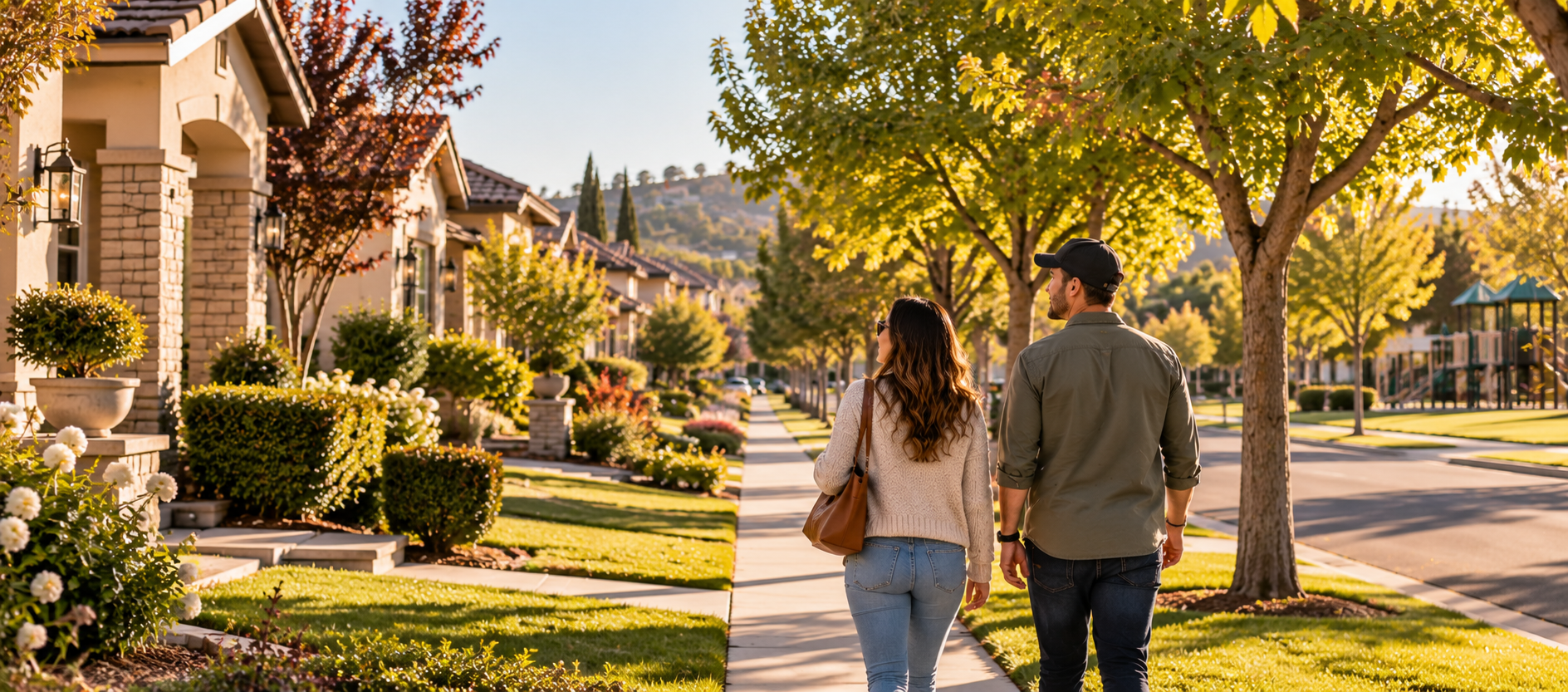
When you're buying a home, it's easy to get caught up in everything inside the house. You notice the kitchen, the flooring, the backyard, the primary suite, and all those little details that make you think, Yep, I could totally live here.
But here's something worth remembering: you can change a lot about a house. You can't easily change the neighborhood.
You can paint the kitchen, replace the flooring, remodel the bathroom, or turn the backyard into your dream entertaining space. You can't move the street, change your commute, relocate the grocery store, or make a busy road disappear.
That's why getting to know the neighborhood is just as important as touring the house.
1. What Is the Neighborhood Like at Different Times of Day?
A neighborhood can feel completely different at 8 AM than it does at 8 PM. If you have the opportunity, visit more than once and try to see the area during different times of the day and week.
Pay attention to traffic, noise, parking, activity, and how the surrounding streets feel. You're not necessarily trying to determine whether a neighborhood is "good" or "bad." You're trying to figure out whether it fits the way you actually live.
2. How Is the Commute?
A beautiful home can lose some of its appeal if you're spending hours every week getting to and from work.
Before buying, test the commute during the times you'd normally be traveling. Look at the actual route, not just the mileage on a map. A home that's 20 minutes away on a quiet Sunday afternoon can feel very different during a Monday morning commute.
This is especially important if you're relocating to the Central Valley from another area and aren't familiar with the traffic patterns yet.
3. What's Nearby?
Think about the places you visit regularly. Where's the closest grocery store? Your favorite coffee shop? Restaurants, parks, medical offices, gas stations, shopping, or other places you visit every week?
You don't necessarily need everything five minutes from your front door, but understanding what's nearby can give you a much better idea of what everyday life will actually look like.
4. What Are the Roads and Traffic Like?
Don't only look at the street where the house is located. Look at the roads surrounding the neighborhood too.
Are there major streets nearby? Is there a freeway entrance close by? Does traffic use the neighborhood as a shortcut? Are there road improvements or other projects planned nearby?
These details may not matter much during a 20 minute showing, but they can make a difference when you're living there every day.
5. What Parks and Recreation Are Nearby?
If you have kids, dogs, or simply enjoy getting outside, nearby recreation can become a surprisingly important part of your lifestyle.
Look for parks, walking paths, playgrounds, sports facilities, community centers, and other outdoor spaces. More importantly, think about whether they're places you'll actually use.
A park five minutes away sounds great, but it's even better when you can genuinely picture yourself walking there on a Saturday morning.
6. What Is the Parking Situation?
Parking is one of those things that's easy to overlook when you're focused on the house.
Take a look around the neighborhood. Are there cars lining the streets? Is street parking limited? Do homes have driveways or garages? Are there parking restrictions?
If you have multiple vehicles, regularly entertain guests, or have kids who will eventually be driving, parking could become much more important than it initially seems.
7. Are There HOA Rules or Fees?
If the home is part of an HOA, don't stop at looking at the monthly or annual fee.
Take the time to understand what the HOA covers and review the applicable rules and restrictions. Depending on the community, there may be requirements involving landscaping, exterior changes, parking, pets, rentals, or other aspects of the property.
Make sure you understand what you're agreeing to before you purchase.
8. What Is Being Built Nearby?
The neighborhood you see today isn't necessarily the neighborhood you'll have five years from now.
Look into planned residential developments, commercial projects, road improvements, and other construction happening nearby. New development isn't automatically a positive or negative thing. What's important is understanding what may be changing around the property so you can make an informed decision.
9. What Are the Schools and Boundaries?
If schools are important to your household, research the schools associated with the specific property you're considering.
Don't assume the closest school is automatically the assigned school. Boundaries can vary by address and may change over time, so verify current information directly with the appropriate school district.
You may also want to consider school locations, transportation, programs, and other factors that matter to your family.
10. Does the Neighborhood Fit Your Lifestyle?
This might be the biggest question of all.
Imagine your normal week living there. Where would you get coffee? Where would you grocery shop? Where would the kids play? Where would you walk the dog? How long would it take to get to work? Where would you go for dinner?
A house can check every box on your list and still not feel right if the surrounding lifestyle doesn't work for you.
Think about what you naturally enjoy doing and whether the neighborhood makes those things convenient.
11. What Is the Future of the Area?
When you're buying a home, it's worth looking beyond what's happening right now.
Are there major projects planned nearby? Is new development coming? Are businesses moving into the area? Could transportation or infrastructure change?
You don't need to predict exactly what the neighborhood will look like ten years from now. You simply want to understand what you can reasonably learn about its future before making a major purchase.
12. Can You Picture Yourself Living There for Several Years?
Finally, think beyond move in day.
Your needs today may not be the same five years from now. Maybe your family grows, your job changes, you start working from home, or you simply want something different from your surroundings.
You don't have to predict your future perfectly. But if you're making a major purchase, it's worth considering whether the neighborhood can continue to work for the life you're building.
Don't Just Tour the House. Explore the Neighborhood.
When you're buying a home, it's easy to spend an hour walking through the property and only a few minutes looking around outside.
Try flipping that mindset.
Drive around the neighborhood. Visit nearby parks. Test your commute. Check out the surrounding businesses. Come back at a different time of day. Look at what's happening around the property, not just what's happening inside it.
Because when you buy a home, you're not just buying the house.
You're choosing a location, a commute, a neighborhood, and a lifestyle.
And those things deserve just as much attention as the kitchen you've already fallen in love with. 😂
If you're looking for a home in Modesto, Turlock, Ripon, Riverbank, Manteca, Salida, Los Banos, or anywhere throughout the Central Valley, I'd love to help you understand not only the homes available, but the communities surrounding them. 🖤🏡
The right home isn't just about what's behind the front door. It's about whether the life outside that door works for you, too.